The first A-Corp law is here
Introducing the Colorado Artist Company Act
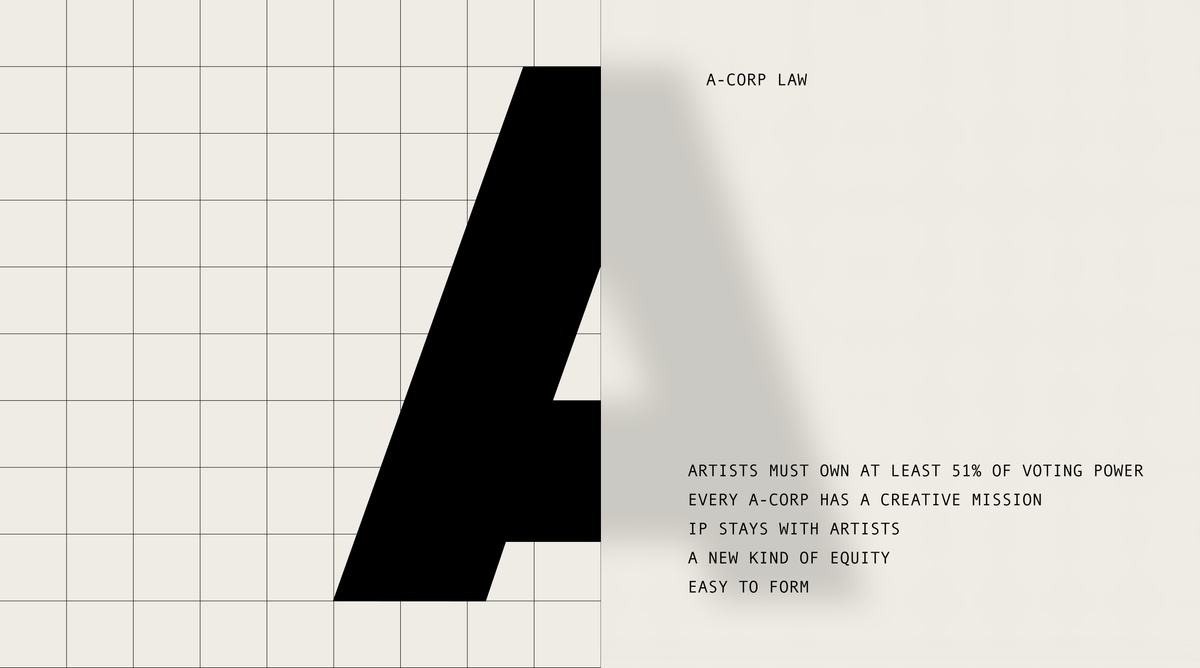
For the first time ever, a law will create a business entity designed specifically for artists and creative people. A new form where artistic control, IP protection, collective ownership, and a creative mission are part of the default structure.
On March 4, the Colorado Artist Company Act, cosponsored by Senators Bridges (D) and Catlin (R) and Representatives Martinez (D) and Taggart (R), was filed in the Colorado State Capital building.
The Artist Corporation, or A-Corp, is finally here.
Why we need A-Corps
When it comes to business, artists almost always come last. Investments trade control for capital. Catalogs get signed away. Health insurance stays out of reach for artists, while the employees of companies that distribute them enjoy shared benefits and more.
The A-Corp changes this. By taking what was technically possible before — if you hired the right, expensive lawyers — and turning those protections into a new standard available to all.
Think of cooperatives and public benefit corporations. Both existed before they were legally codified. But systematizing them made them accessible and widely adopted. The A-Corp does the same. It creates a fork of the LLC model with all its tax advantages and simplicity, plus new rights built for the specific needs of creative people.
What A-Corps can practically do
What does this practically mean for you as an artist or creator? A few of the key A-Corps components:
Artists must own at least 51% of voting power. This is locked into the statute — no operating agreement can override it. The people making the art must always control the company in order to be an A-Corp.
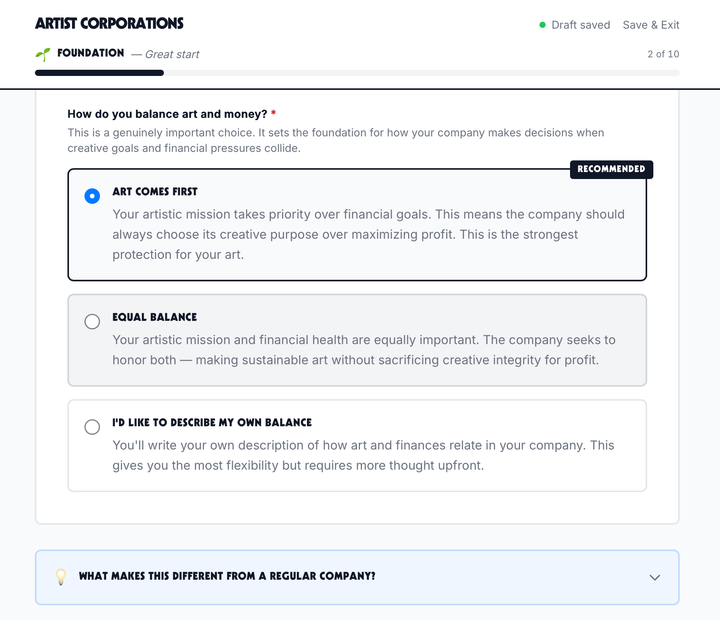
Every A-Corp has a creative mission. This purpose has legal weight. The company can declare that the mission has primacy over financial objectives, or set its own balance. An A-Corp can also elect to become a Public Benefit Artist Company, if intended to produce a broader public benefit.
IP stays with artists. An artist-first approach to IP and ownership. Creative work contributed to an A-Corp has added protection: rights revert back to its creator if the entity dissolves. When forming an A-Corp, the value of an artist's IP and labor count as capital contributions to the entity’s overall valuation — a subtle but very significant change.
A new kind of equity. The A-Corp allows artists and creators to easily create shares and fractional ownership of their A-Corp that can be distributed to collaborators, used as compensation, or sold to investors. The A-share has the potential to become a new form of equity and comp in the creative economy.
Easy to form. The bill allows for A-Corps to be created using fill-in-the-blank provisions that help artists easily set up ownership, governance, IP, and tax treatment in easy to understand steps. No expensive lawyers required.
Try it yourself
Today we’re launching a new Artist Corporations website that demonstrates what the law looks like in practice.
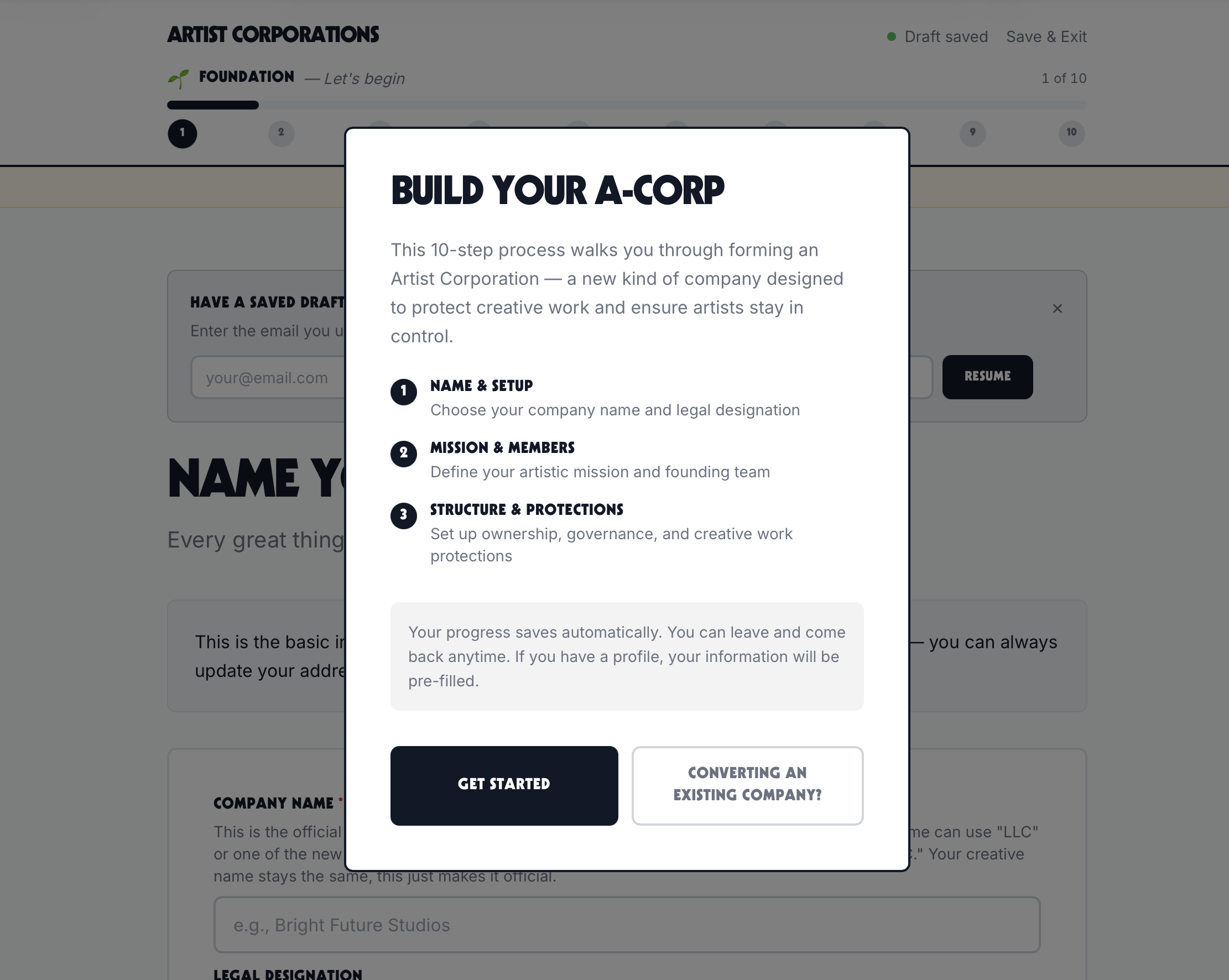
You can:
- Read the actual text of the draft with annotated plain English explanations
- Go through a mock registration flow for becoming an A-Corp based on the actual text of the law
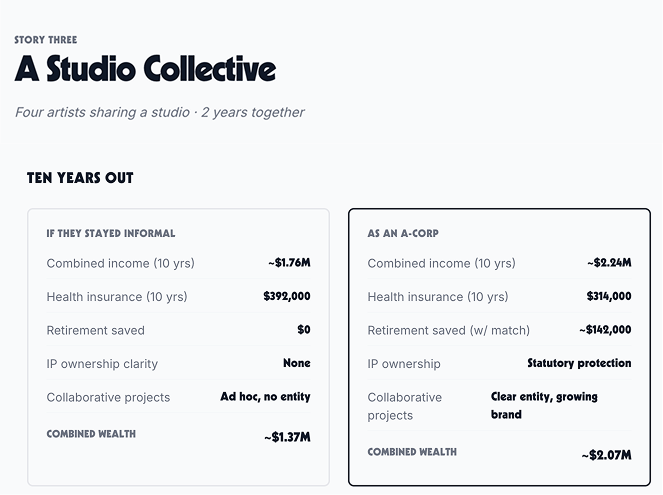
- Try the A-Corp calculator, which allows you to see how becoming an A-Corp might look like for your practice.
- Ask questions to the A-Corp chatbot, an LLM hooked up to all the background material on the project.
Why Colorado?
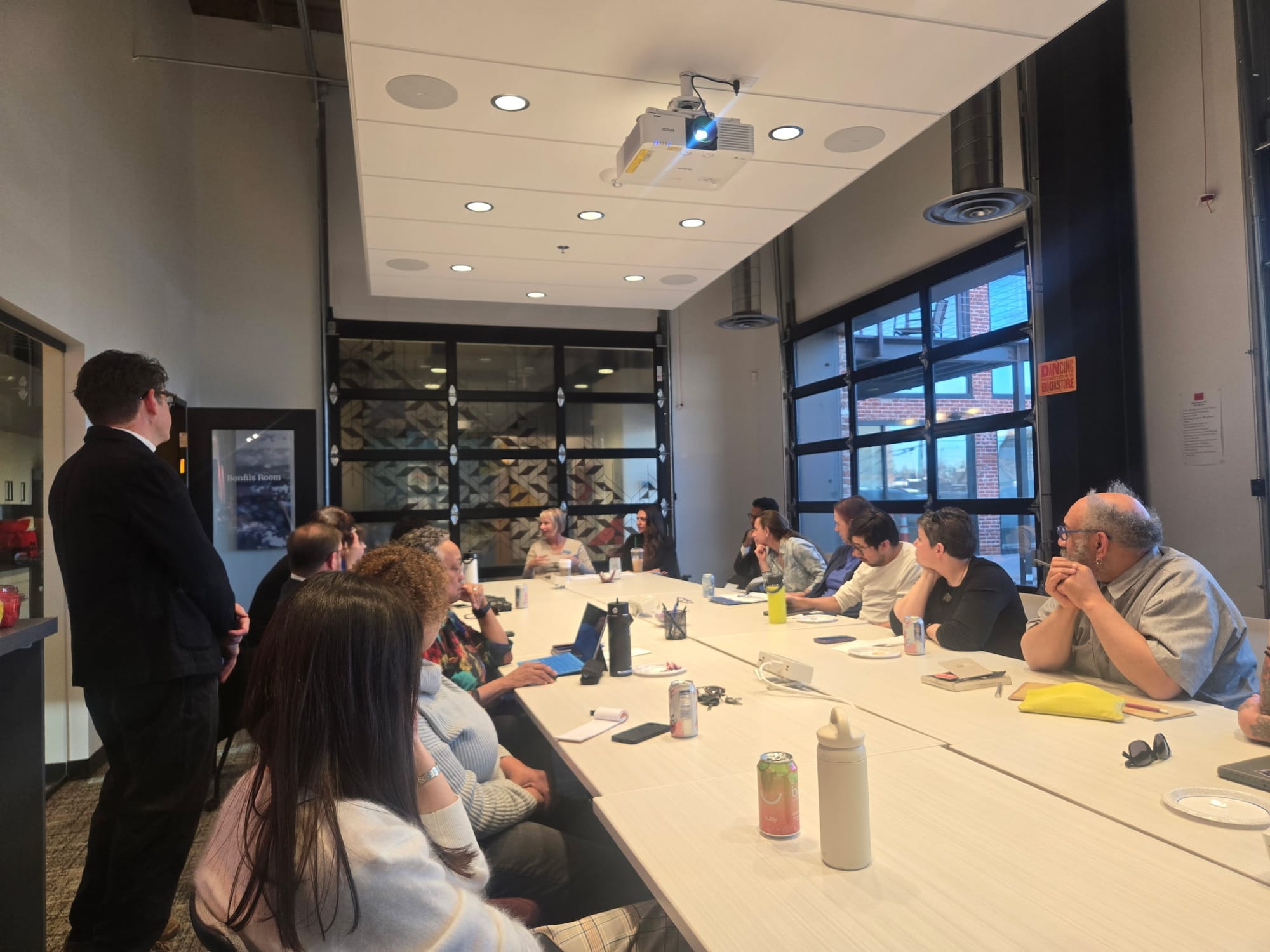
We’ve made a half-dozen trips to Colorado to meet with cultural, business, community, and political leaders about Artist Corporations over the past year. We've been met with an open, warm, and understanding audience.
Art and creativity are huge in Colorado. It’s the #1 state in America for the percentage of the population with an active creative practice. More than 100,000 people are employed in creative jobs, generating $16.9 billion for the economy (3.9% of GDP) in 2024 alone.
At the same time, many of those people are struggling. Leaders in Colorado see it as vital to that workforce, and the state’s overall reputation, to better support creative people. They see the A-Corp as a groundbreaking new way to do that, without adding costs to the state budget, and while empowering a core part of their population with greater economic agency and tooling than before.
Through this enthusiasm and goodwill, we’ve built a rare thing in today's America: a bipartisan coalition. Leading Republicans and Democrats in both houses of Congress are sponsoring this bill. There's widespread support for A-Corps as a new tool of economic development and creative empowerment for individual artists and creators, and its benefits to Colorado overall.
Early March this bill was introduced. In April there will be public hearings and testimony before it heads to a vote. If all goes as planned, we will have a Colorado A-Corp law on the books this year, and actual Artist Corporations in the wild by next.
This would be a big step forward for artists and creators in Colorado, and around the world. Colorado allows businesses to register from anywhere through registered agents. Much more on this to come.
How you can help
As we've said repeatedly, this is a longterm, group effort. Many hands and minds have helped us get this far. To get where we need to go, we need many more.
Some ways to get involved:
- Tell your friends about A-Corps. This movement will be big and participation will be meaningful. Spread the word. Following and sharing our IG is a good place to start.
- Join the A-Corp community space on DFOS to ask questions and talk about the law with others.
- If you're an artist or creator based on Colorado, email us: hello@artistcorporations.com. We'd love to learn more.
- If you're interested in bringing A-Corps to your country and state, we'd love to hear from you too. Drop us a line!
From dream to reality
This work is almost two years old. It’s a project built on many lifetimes of painful lessons that artists and creative people have experienced. There's a long way to go. But soon, for the first time, Artist Corporations will be real.
To paraphrase our TED talk: Artists don't need pity. They need power.
Together, we're building it.
Comments ()