What DFOS Is Becoming
A post I shared with the DFOS founding community, and some of what came back
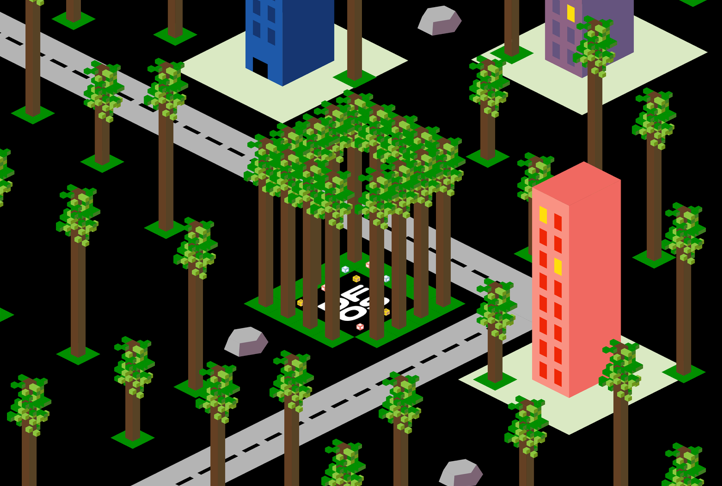
This weekend I purposely didn't touch a computer. After a month straight of heavy DFOS usage — being the always-present community manager across dozens of spaces — I needed to step back.
The space was helpful. Rather than trying to perform, I was able to instead feel. Great cultural experiences understand our emotions. Did I understand mine?
The honest question
The first and hardest question I was sitting with: is DFOS different enough?
We set out to make a shared private internet built around community connection. This is happening, with more than 2,000 messages sent last week alone across the few spaces we’ve allowed so far. The activity is good. The attention it demands less so.
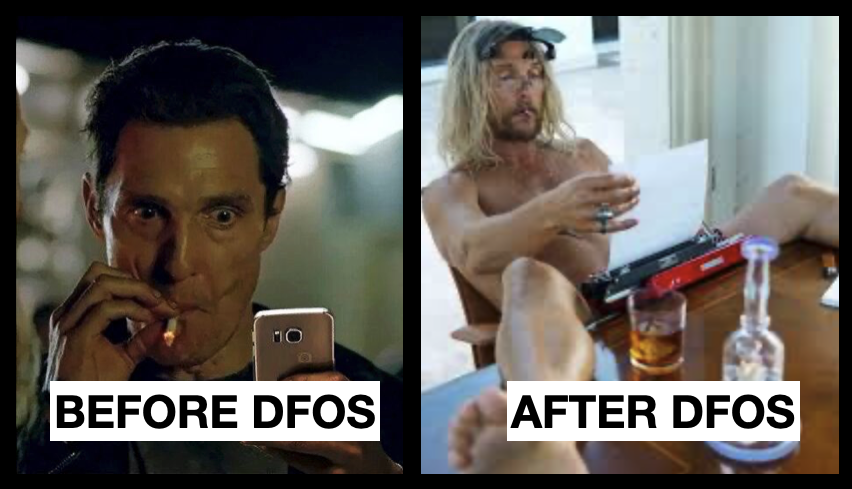
When I open DFOS and see notifications across multiple spaces and conversations, I sometimes feel the same anxiety I get opening Slack and every other noisy platform. If being part of DFOS means your phone is always on, always asking something of you, then we've accidentally rebuilt the thing we're trying to replace.
I shared this with the team and it turned out everyone was feeling versions of it. Lena went to a cafe with only a notebook because the information flooding had become overwhelming. Brandon started dedicating Saturdays to being offline. Ilya pointed out that chat creates an instant daily to-do list where it's hard to control your level of participation. This wasn't what we set out to do.
What showed up
To break the cycle, I started the next day by scrolling on butcher paper instead of going to my computer. I began with a simple sketch of what a "Today" view might look like — one calm surface that shows you what's going on across your spaces.
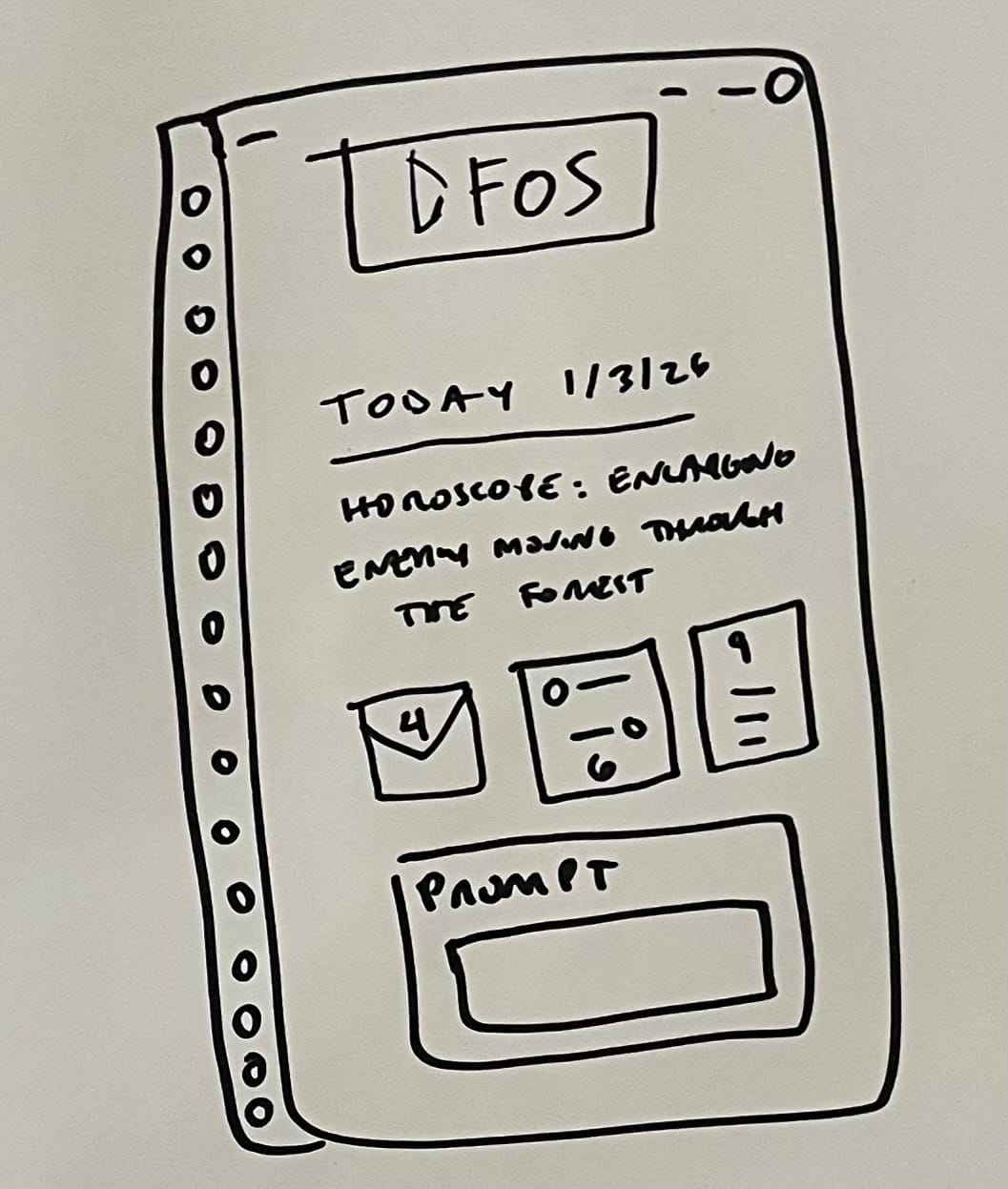
But then something bigger showed up.
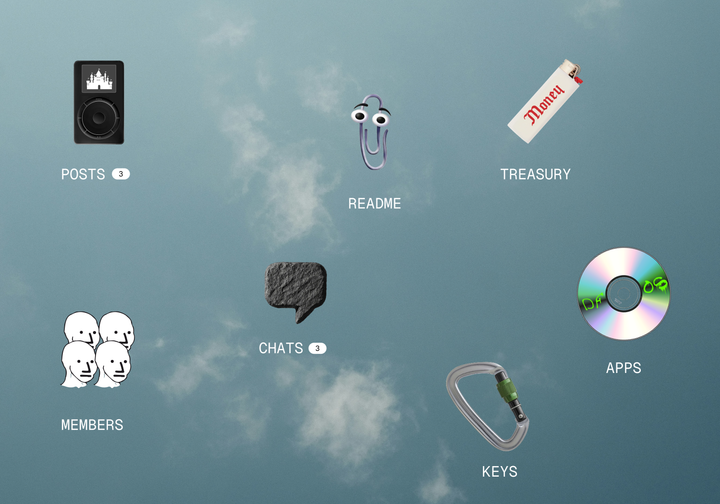
I started imagining what the homepages of actual spaces might look like when admins have real control over them. We've always said each space should be different, but what if every space had a homepage its Spacerunner(s) could design — tiles for specific conversations, a feed from a topic, an embedded app, a pinned post — whatever tells the story of that community? A music space looks like a music space. A research space looks like a research space. No two spaces look the same because no two communities are the same.
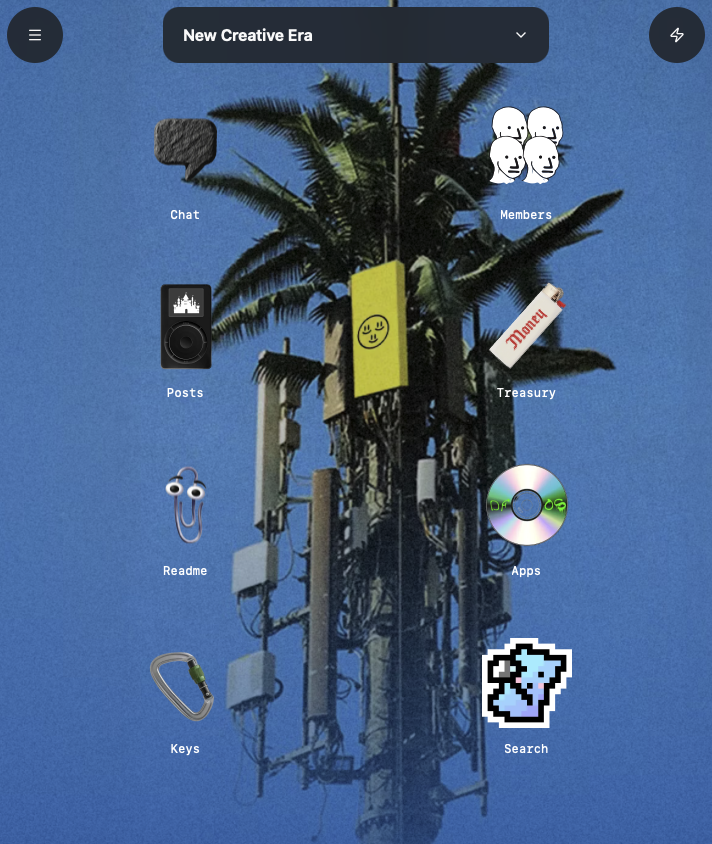
And then: subgroups. Join a subgroup and you subscribe to their content, their chat, their posts. You only see what you opt into. A 500-person space can feel intimate to every member depending on which subgroups they're in. You don't have to tend a massive community — you tend your corner of it.
The core idea stated simply: DFOS is a platform where every community designs its own internet.
We provide the tools and each community decides how to use them. Apps extend the baseline and provide spaces even more opportunities to create unique experiences. What you see in one space might be completely different from what you see in another — not just different conversations, but different functions.
Two kinds of attention
This also clarified something about attention.
Until recently, DFOS worked like most communication platforms: everything pushed to you. Every chat, post, comment, and notification asked for immediate attention. This is what created the firehose feeling.
This week we turned down the firehose. We adjusted how notifications work, dropping the number of pings by 20x. We're now in the middle of a revamp of this whole part of our product that respects each person's attention much more. Push for the things that need immediacy — a DM, a mention, a time-sensitive event — and an editorialized briefing for everything else — new posts, community updates, digest highlights. A calm, curated moment each day or week where you catch up at your own pace.
Not many platforms would be proud of reducing notifications by 20x. We are.
What the community said
We posted these honest thoughts to the DFOS founding community — over a thousand people who've been living inside the platform since early February. Within hours, 27 comments came in. You can read them here. Some of what people said:
"The goal that I'm most hoping the team will achieve: being online without online anxiety."
"What I want when I first walk into someone's dark forest is to feel like it is a space unlike any other. The next thing I would want is to find my place where I can feel helpful and engaged."
"As someone who very seriously contemplates and studies how and where I place my attention, having the granular ability to design how I can both build and interact with my communities will make me WAY more likely to both build and engage with them."
It was a relief to hear our admission of challenge be understood and appreciated, not judged.
New, not the same
Whenever we make things, we feel the simultaneous pull between what we know and what we feel. What we know encourages us to do things that resemble what’s already here. What we feel often pushes us into the uncharted, manifesting paths forward that are both exciting and uncomfortable in their newness.
DFOS dances on this edge. Providing things we know we need (chat, communication, money, privacy) expressed through the lens of things we need to feel (respected, unexploited, safe, cared for).
We’re one month into this private alpha. Parts are still rough. But the quality of conversation already happening inside — the willingness of people to sit with hard questions, to build alongside us, to articulate what they actually want from digital community — is already exceptional. Three posts by members this past week were so good we wanted to send them out as their own newsletter.
This is what happens when you hang out in the dark forest. People don’t show up to perform. They’re there to think, to feel, and to witness. Where it goes next isn't up to just one person or one platform. It's up to all of us.
Go deeper:
Comments ()