A historic first for A-Corps
Our first vote, our first victory
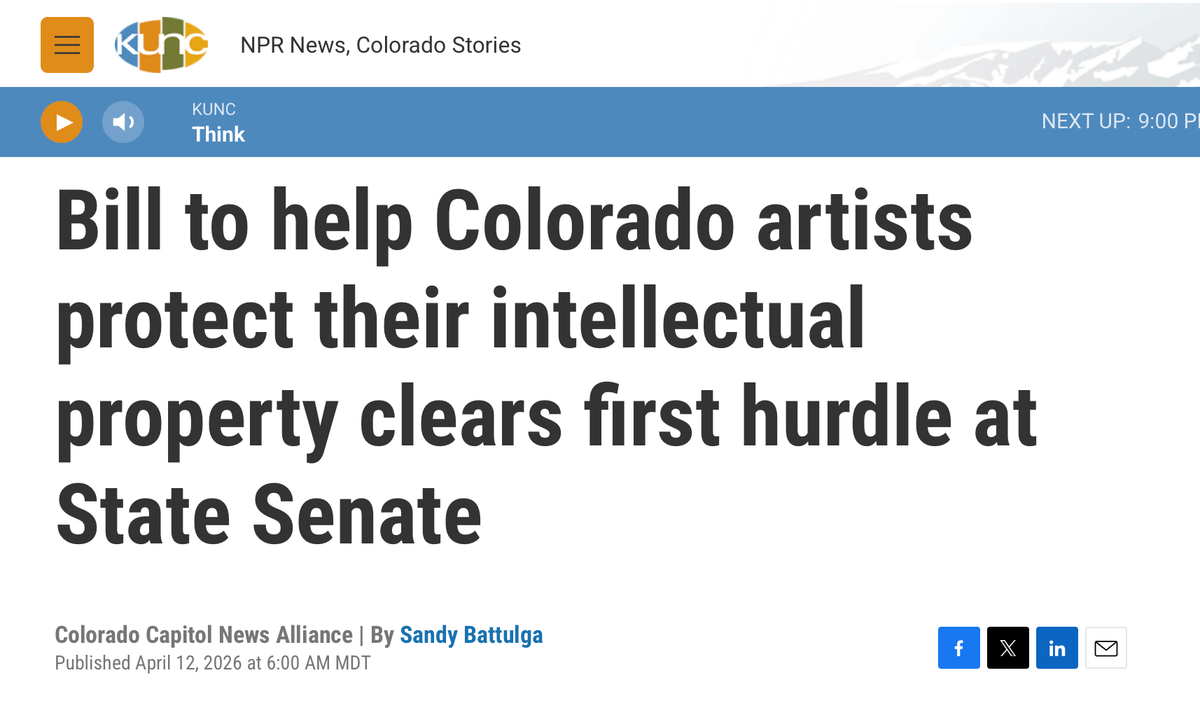
Last Thursday was a historic day for Artist Corporations: we had our first public hearing, first vote, and first victory as the path to A-Corps becoming a reality took another big step forward.
The setting was the Business, Labor, and Technology committee, a five-member body in the Colorado Senate, where the Colorado Artist Company Act was up for discussion. The five senators heard testimony from nine people about the bill: eight in favor (which included a painter, a poet, representatives from the Governor’s office and other key agencies, as well as us), and one opposed (a lawyer from the Colorado Bar Association who argued that because of existing LLC laws he helped author, the A-Corp law should not happen).
You can watch a video of the proceedings below or on YouTube:
During the testimony there were a number of noteworthy exchanges.
Senator Jeff Bridges (D), a cosponsor of the bill, spoke about its benefits:
“It’s a practical, bipartisan solution that allows artists to organize in a way that reflects how they actually work while still maintaining control and attracting investment.... In the status quo, people individually can go to lawyers and create one-off custom LLCs or S-Corps that put all the power in the lawyers. It is an ad-hoc system where artists have little say or voice… We want those artists engaged in making creative work, not getting bogged down in custom LLCs.”
Senator Marc Catlin (R), another cosponsor, shared the importance of art to his rural district:
“I’m from a farm. I’ve spent my career in ag, water, banking, and small business. What I’ve learned is simple: if people are going to build something, they need a system that matches how they actually operate. We’re seeing that same issue in the creative economy. Across the Western Slope, we’ve got people trying to build real businesses — artists, designers, filmmakers, sculptors. They contribute to their communities… but when they go to set up a business, the options don’t seem to fit… What we hear is that they end up going to attorneys to try and make something that works, or they take deals that give up too much control just to get started. This bill gives them another option to form a business that fits their line of work.”
Daisy Fodness-McGowan, Executive Director of the RiNo Art District, testified to how artists create value but don’t participate in the benefits. In creating what is now a vibrant, popular neighborhood, she notes: "Artists showed up first. They painted the walls. They built the culture. And they don't own a piece of what they created."
Colorado-based poet Matty Bovard talked about how artists are discouraged from pursuing their livelihoods: “I dropped out of my MFA after a professor said there was no hope of a sustainable career on my own original work."
The desire to change this was echoed by Maggie Saunders, an artist and member of the Boulder County Arts Alliance, who said: "I believe in a world where children grow up knowing that being an artist is a real job."
The members of the committee agreed. With a unanimous margin of 5-0, they voted to move the bill forward to the Appropriations committee (a technical step), before it goes to the Senate floor for a full vote. We feel good about our chances from here.
These artists and leaders from across Colorado spoke more eloquently about the importance of this work to their lives and communities than we ever could. After two years of work on the A-Corp concept and a year of grassroots community building in Colorado, we were deeply moved by the proceedings.
Incredibly, the foundations of a new economic system for creative people are almost here. Thank you to all the wonderful people in Colorado who have been a part of this getting this far, and all the supporters yet to come.
We’re doing it, gang.
Comments ()